Platform licensing and implementation for four common starting points.

Each engagement begins with a defined module, configuration, integration, launch, responsibility, and post-launch scope.

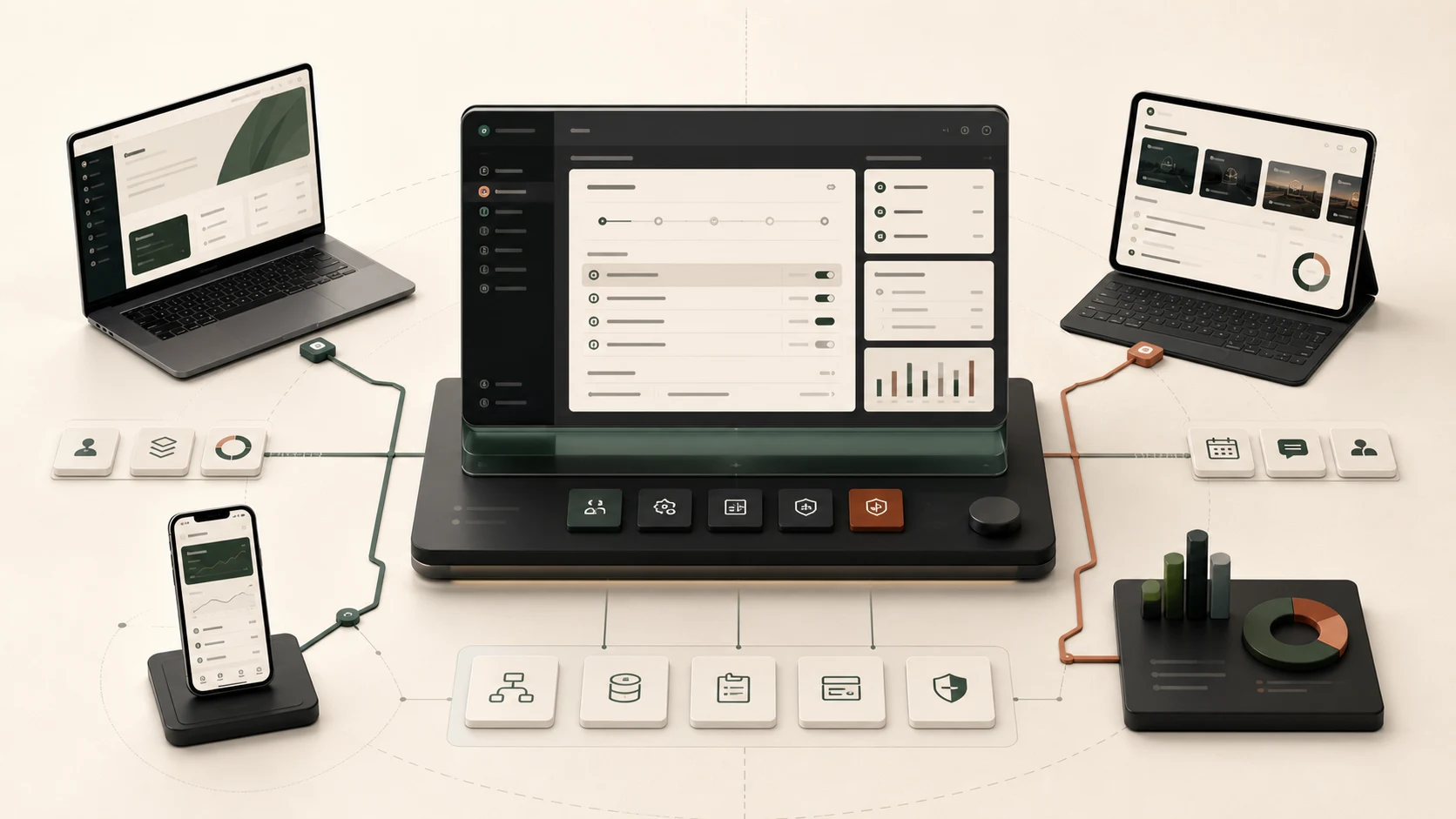
A configurable platform control plane coordinating customer channels, modules, operations, and reporting
01
New operating company or brand

Launch a new platform.

License the selected platform core, configure the branded customer and back-office surfaces, connect mandatory services, validate launch flows, and prepare operating access and issue routes.

02
Phased replacement

Modernise a fragmented estate.

Map the current channels, tools, integrations, and data dependencies; agree what must remain; then move selected capabilities in phases with explicit coexistence and cutover rules.

03
Controlled market variation

Add a market or brand.

Reuse the shared core while configuring language, content, customer journeys, roles, external services, reporting views, and launch requirements for the new operating scope.

04
Back-office improvement

Strengthen operations.

Review roles, permissions, support queues, review states, exception handling, operational reports, and escalation paths; then configure the agreed changes into the operating surface.

A connected operating surface for configuration, workflow, monitoring, and controlled access
Operating surface

Back-office operation is part of the implementation—not an afterthought.

The delivery scope should define who configures the platform, who reviews customer or transaction exceptions, which queues and reports are required, and how issues move between operating teams and service owners.

  • AccessNamed roles, permitted actions, restricted areas, approval points, and access readiness.
  • WorkflowNormal, pending, restricted, failed, and exception states with visible ownership.
  • EvidenceOperational views, report outputs, audit needs, known limitations, and release-readiness checks.
Delivery model

A delivery model built around named outputs.

The commercial scope records what will be configured, connected, validated, handed over, supported, and excluded.

01 / Define

Product and solution scope.

Modules, journeys, business rules, roles, providers, outputs, environments, constraints, and exclusions.

02 / Implement

Configuration and integration.

Platform setup, interface coordination, access, test data, expected flows, and failure handling.

03 / Validate

Acceptance and readiness.

Agreed functional evidence, operating access, launch checks, issue routes, and outstanding limitations.

04 / Service

Handover and change.

Launch support, contracted service levels, incident ownership, planned changes, and release coordination.

Configurable capability

Typical implementation scope.

The items below describe common work areas, not a promise that every module or service is included in every engagement.

Product & solution definition

Customer and operator journeys, module selection, state and rule decisions, permission model, provider map, acceptance scope, and exclusions.

Platform configuration

Brand and market setup, customer surfaces, account rules, content controls, back-office roles, workflows, and reporting views.

Integration coordination

Interface ownership, environment and credential readiness, expected and failed flows, data exchange, provider testing, and cutover dependencies.

Operational readiness

Operator access, support and review queues, issue routing, release checks, operating guidance, known limitations, and post-launch ownership.

Scope boundary

Final module availability, delivery dates, third-party responsibilities, service levels, environments, release evidence, and post-launch commitments are confirmed in the signed commercial and delivery documents.

Send the current system, required integrations, and target launch window.

Email our team