01 / Customer experience
Configure the branded customer layer.
Web and mobile journeys, navigation, content, account views, and market-specific presentation.
License the platform foundation, select the required modules, and configure the customer experience, roles, workflows, integrations, and reporting for the operating model.

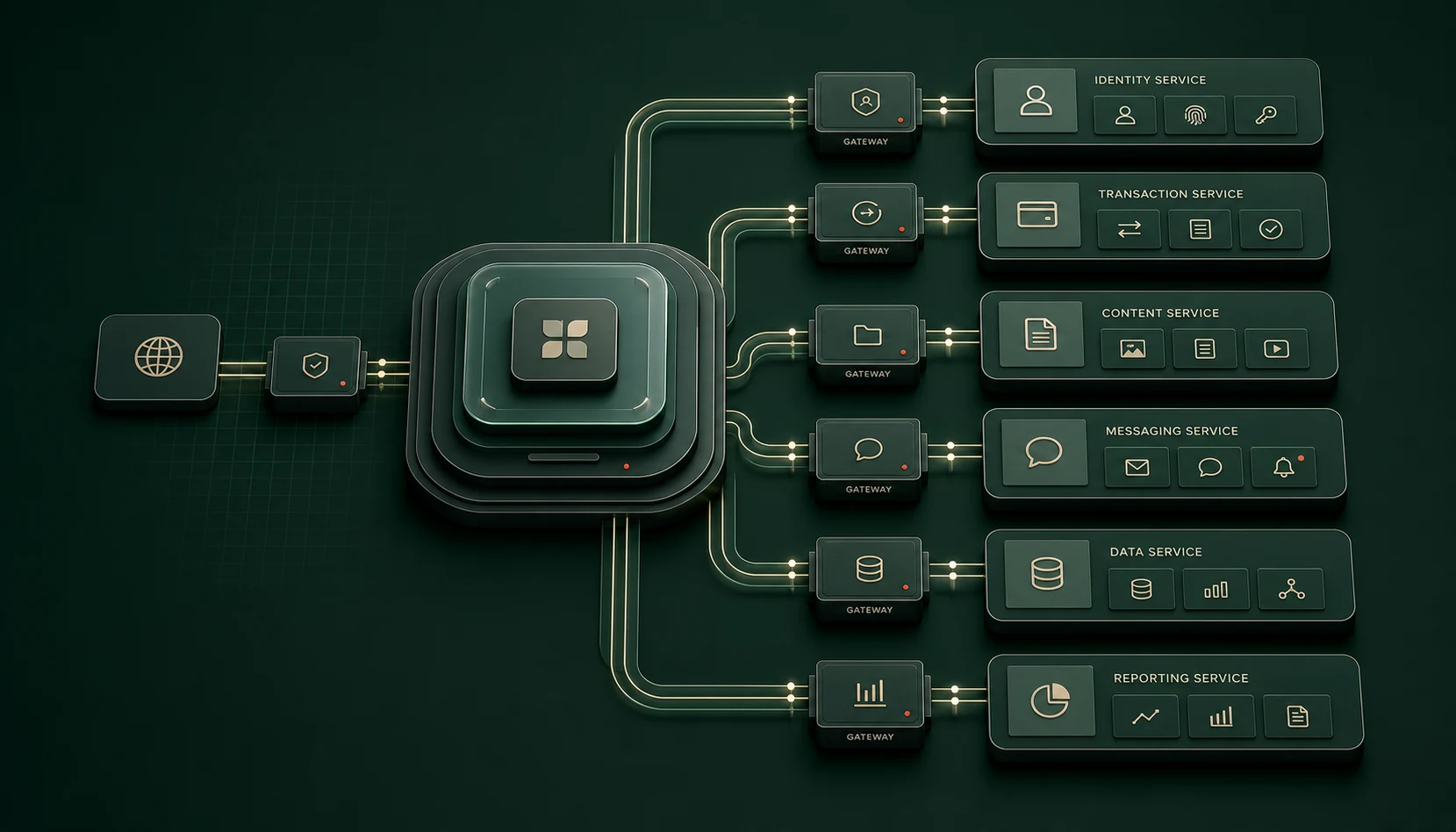
The platform separates customer experience, account activity, operational work, and reporting without turning them into disconnected products.
Web and mobile journeys, navigation, content, account views, and market-specific presentation.
Customer profiles, account states, transaction flows, entitlements, rewards, and service status.
Role-based administration, configuration, review queues, support workflows, and exception handling.
Configured views and data outputs for monitoring, reconciliation, investigation, and product decisions.
Access, workflow, review, exception, and reporting requirements are agreed during scope and configured for the teams that will run the platform.
Define which teams can view, configure, review, approve, and support each area.
Separate controlled business configuration from changes that require delivery work.
Make review states, failure routes, ownership, and escalation visible to operators.
Agree the operational views and data outputs required for daily oversight and review.
The exact scope, evidence, responsibilities, release criteria, and post-launch service are recorded for each engagement.
Freeze the selected modules, roles, integrations, operating responsibilities, and exclusions.
Set up brand, market, rules, permissions, workflows, content, and reporting.
Connect and test the required external services and data exchange.
Complete agreed testing, release checks, access setup, and operating preparation.
Hando over, support the agreed launch window, and manage contracted change.
Integration scope can include identity, transaction services, content sources, messaging, data, and reporting destinations. Interfaces, test evidence, failure handling, and ownership are defined before launch.